How Much Does Crypto AI Chatbot Development Cost?
AI & Web3 Product Lead
14 min read
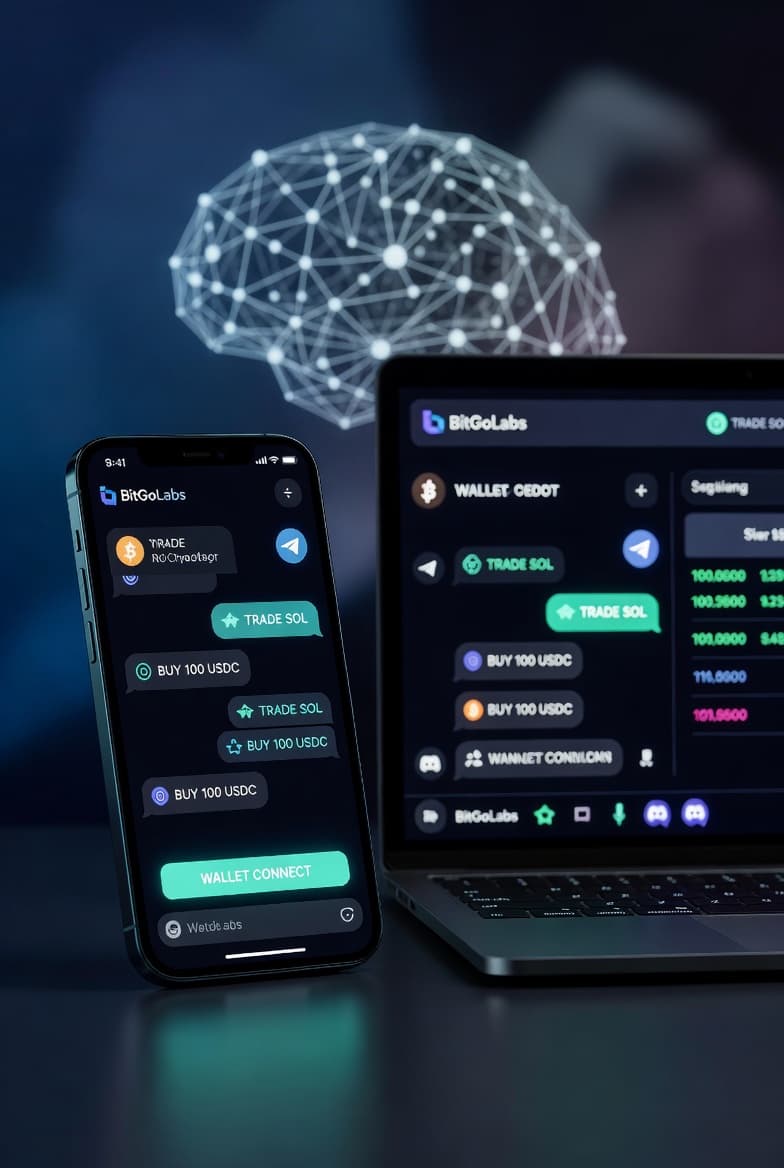
How Much Does It Cost to Build a Crypto AI Chatbot in 2026? – In-Depth SEO Guide
Crypto AI chatbot development cost has become one of the fastest-growing search topics in 2026 as exchanges, wallets, DeFi protocols, NFT marketplaces, and Web3 communities increasingly rely on intelligent conversational agents. These AI assistants now do far more than answer FAQs — they connect wallets, execute trades, explain on-chain events, provide real-time market insights, assist with staking/delegation decisions, detect phishing attempts, and even help users navigate complex smart contract interactions.
The price to build a production-grade crypto AI chatbot depends heavily on the underlying LLM (GPT-4o class, Claude 3.5, Llama 3.1, Grok, custom fine-tuned models), depth of Web3 integration (WalletConnect, ethers.js, viem), real-time data sources (The Graph, Chainlink oracles, CEX/DEX APIs), multi-channel deployment (Telegram, Discord, web widget, mobile SDK), security hardening, and compliance features (KYC prompts, travel rule awareness, anti-money-laundering flagging).
This detailed 2026 guide directly addresses high-volume searches such as “crypto AI chatbot development cost”, “how much does AI crypto assistant cost”, “cost to build crypto trading chatbot”, and “AI chatbot for blockchain price 2026”. You’ll find realistic cost ranges, timeline estimates, major cost drivers, hidden expenses, and proven strategies to launch faster without compromising quality.
Whether you are a crypto startup wanting to reduce support tickets by 70%, an exchange looking to increase user engagement, or a DeFi protocol aiming for better onboarding UX, understanding these numbers will help you budget accurately and choose the right development partner.
Crypto AI Chatbot Development Cost in 2026 – Complete Breakdown
Average crypto AI chatbot development cost in 2026 ranges from $6,000 (basic Telegram bot with price lookup) to $38,000+ (enterprise multi-channel assistant with wallet execution, risk scoring, and regulatory compliance layers).
Cost Ranges by Feature & Complexity Level
- Basic Support Bot (FAQ + price alerts + simple Q&A): $6,000 – $45,000
- Intermediate Trading Assistant (wallet read, portfolio overview, trade suggestions): $8,000 – $36,000+
- Advanced Execution Bot (WalletConnect signing, swap/stake/delegate commands, MEV-aware routing): $5,000 – $30,000+
- Enterprise / Institutional Grade (multi-language, compliance engine, audit trails, SOC 2 readiness): $7,000 – $40,000+
Main Factors That Drive Crypto AI Chatbot Cost
- LLM Selection & Fine-Tuning: Using frontier models (GPT-4o, Claude) vs open-source (Llama 3.1 70B, Mixtral) + domain-specific fine-tuning: $7,000–$32,000+
- Web3 / Blockchain Integration Depth: Read-only vs full transaction signing + gas estimation + simulation: $5,000–$55,000
- Real-Time Data Sources: Chainlink price feeds, The Graph subgraphs, CEX websocket streams, Dune Analytics: $5,000–$25,000 initial + recurring
- Security & Anti-Abuse Layer: Session encryption, rate limiting, jailbreak/phishing detection, wallet risk scoring: $7,000–$40,000
- Multi-Channel & UI/UX: Telegram/Discord bots, web widget, mobile SDK, voice mode: $8,000–$35,000
- Compliance & Regulatory Features: KYC prompts, travel rule integration, suspicious activity flagging: $9,000–$38,000
- Hosting & Inference Infrastructure: GPU clusters for private models, low-latency edge caching: $400–$6,000+/month ongoing
Typical Development Timeline
- MVP (Telegram bot with basic LLM + price API): 9–14 weeks
- Production-ready assistant (wallet read + trade suggestions): 16–26 weeks
- Full execution bot with compliance: 7–14 months
Recurring & Hidden Costs You Must Budget For
- LLM inference (OpenAI, Anthropic, Groq, self-hosted): $500–$8,000+/month depending on usage
- Blockchain RPC + data providers: $200–$2,500/month
- Security monitoring & red-teaming: $1,000–$4,500/month
- Model fine-tuning updates & prompt optimization: $3,000–$12,000 quarterly
How to Lower Crypto AI Chatbot Development Cost Intelligently
Start with open-source models (Llama 3.1, Mistral), use pre-built Web3 SDKs (RainbowKit, ConnectKit), begin on one channel (Telegram), outsource to experienced blockchain + AI teams, and leverage platforms that offer crypto AI chatbot development services with reusable components.
Why Crypto Projects Need AI Chatbots in 2026
User support volume has exploded with DeFi complexity, NFT trading, wallet onboarding, and cross-chain bridging. A well-built AI assistant reduces human support tickets by 60–85%, increases user retention, and creates a competitive moat.
Ready to Build Your Crypto AI Chatbot?
The right crypto AI chatbot is no longer a nice-to-have — it’s becoming table stakes for user-facing Web3 products in 2026. Invest wisely and launch with confidence.
Get your personalized quote today from BitGoLabs — experts in secure, scalable crypto AI chatbot development.
Sources and Further Reading
Explore related services: Blockchain Development, Security Audits, and Web3 Wallet Infrastructure.
Decentralized infrastructure is the new paradigm for global assets. BitGoLabs architects the bridge to this future.
Knowledge Base
Frequently Asked Questions
Clear answers to common questions about blockchain, trading infrastructure, and digital asset platforms.
How does GRID bot strategy differ from DCA?
+
DCA bots average positions through multiple levels as price pullsback within validated ATR ranges, ideal for trending markets where you accumulate during dips and ride the trend higher. GRID bots distribute capital evenly across 5–20 price levels with profit-taking orders at each tier, excelling in range-bound or sideways markets where price oscillates repeatedly through grids. DCA requires directional bias; GRID is direction-neutral. Choose DCA for strong trends (>2% daily moves) and GRID for choppy, oscillating markets (<2% daily moves).
Which blockchain is best for enterprise applications?
+
The ideal blockchain depends on scalability, privacy, governance, and regulatory requirements. Enterprises often choose permissioned or modular Layer-2 architectures for performance and compliance, while public networks like Ethereum provide strong security and ecosystem liquidity. BitgoLabs evaluates business objectives to recommend the most suitable architecture.
Does your platform support DEX copy trading?
+
Yes. We build non-custodial mirroring systems for DEXs like Hyperliquid, dYdX, and Uniswap using wallet-tracking and smart contract execution logic.
Which engine is better: Unity or Unreal Engine 5?
+
It depends on your project goals. UE5 is superior for high-fidelity, cinematic realism, while Unity offers excellent cross-platform flexibility for mobile and lightweight web experiences.
Is a blockchain necessary for a Metaverse?
+
While not strictly required, blockchain enables true digital ownership, decentralized governance, and a secure internal economy that isn't controlled by a single entity.
Infrastructure Brief
Initiate Protocol Design
Connect with BitGoLabs architects to engineer institutional-grade blockchain, trading, and tokenization systems.
Related
Recommended Insights

AI Security & Governance 2026-Blockchain-Protected AI Systems
Explore AI security, blockchain verification, and decentralized governance in 2026 to protect AI systems, ensure trust, and prevent manipulation.

How Crypto Exchange Superapps Are Poised to Replace Traditional Banks
Discover how blockchain identity solutions with DIDs, SSI, and ZKPs secure user data, prevent fraud, and enable full self-sovereign control in 2026.

How Much Does RWA Tokenization Development Cost 2026?
2026 RWA tokenization platform cost: real estate, equity, commodities – smart contracts, KYC/AML, secondary market, compliance – full development pricing guide.