Crypto Token Development Cost: ERC-20, BEP-20 & Solana Token Guide
Tokenomics Strategist
10 min read
Crypto Token Development Cost and Launch Guide (2026)
Deploying a basic token contract takes minutes. Building a token that is safe, fairly distributed and credible to exchanges and investors takes planning. This guide breaks down token development cost, compares ERC-20, BEP-20 and Solana SPL tokens, and lists what a professional launch includes beyond the smart contract.
For help with your project, see our token development and launchpad services.
Token Development Cost at a Glance
| Tier | Planning budget (USD) | Typical timeline | Typical scope |
|---|---|---|---|
| Starter | $2,500 – $6,000 | 1–3 weeks | Standard token, tokenomics outline, vesting and lock contracts, deployment |
| Production | $6,000 – $14,000 | 3–8 weeks | Custom token features, tokenomics model, staking or claim contracts, launchpad pages, test coverage |
| Launchpad / multi-chain | $14,000+ | 2–4 months | IDO or ICO launchpad, whitelist tiers, KYC hooks, multi-chain deployment, admin console |
Estimates for planning only. An independent security audit is normally a separate cost, and legal advice on how your token is classified is essential before any public sale.
ERC-20 vs BEP-20 vs Solana SPL
| Standard | Network | Strengths | Consider |
|---|---|---|---|
| ERC-20 | Ethereum, Arbitrum, Base, Polygon | Deepest wallet, exchange and DeFi support | Higher fees on mainnet; Layer-2s reduce this |
| BEP-20 | BNB Chain | Low fees, large retail user base | Different ecosystem and listing paths |
| SPL / Token-2022 | Solana | Fast settlement, very low cost, built-in extensions | Different tooling (Rust, Anchor) and wallet ecosystem |
What Drives Token Development Cost
- Token features: fixed supply versus mintable, burn, pause, blacklists, transfer fees and role-based permissions. Each privileged function must be justified and disclosed.
- Tokenomics design: allocation, emission, vesting and sinks. Weak tokenomics is the most common cause of post-launch price collapse.
- Vesting and locking: team, investor and advisor schedules, plus liquidity locking.
- Launchpad features: whitelist tiers, contribution caps, refunds, claim contracts and KYC integration.
- Security review: unaudited contracts are a red flag for exchanges and serious investors.
- Chains: every extra chain adds deployment, testing and bridge or messaging complexity.
What a Professional Token Launch Includes
- Define utility and the problem the token solves, not only the price story.
- Design tokenomics: supply, allocation, vesting, cliffs and emission.
- Build and test contracts with unit, fuzz and fork tests.
- Run an independent audit and fix findings before mainnet.
- Deploy, verify source code and publish the contract permissions plainly.
- Set up liquidity and lock it, and document wallets and schedules for holders.
- Prepare legal review of the offering structure and jurisdiction rules.
Red Flags to Avoid in Token Contracts
- Owner can mint unlimited supply without limits or timelock
- Hidden blacklist or transfer restrictions that can trap holders
- Unlocked liquidity that can be withdrawn at any time
- Unverified source code on the block explorer
Whether a token is regulated as a security or similar instrument differs by country. This guide is not legal advice.
Frequently Asked Questions
How much does it cost to create a crypto token?
A simple token can cost from about $2,500 with tokenomics and vesting. Production tokens with custom features typically run $6,000–$14,000, and launchpad platforms more.
Which blockchain is best for a new token?
Choose where your users and liquidity are. Ethereum Layer-2s, BNB Chain and Solana are common choices, each with different fee, tooling and ecosystem trade-offs.
Do I need an audit?
For any token that will hold or raise real value, yes. It protects holders and is expected by exchanges and launch partners.
How long does token development take?
Simple tokens take 1–3 weeks. Launchpad platforms take a few months.
Related: ICO development strategies and tokenomics, RWA tokenization cost. Ready to start? Explore token development services or request an estimate.
Sources and Further Reading
Decentralized infrastructure is the new paradigm for global assets. BitGoLabs architects the bridge to this future.
Knowledge Base
Frequently Asked Questions
Clear answers to common questions about blockchain, trading infrastructure, and digital asset platforms.
Are smart contracts secure?
+
Smart contracts can be highly secure when developed using audited frameworks, formal verification, and rigorous testing. Vulnerabilities typically arise from poor coding practices or missing audits. BitgoLabs follows strict security engineering standards, automated testing pipelines, and third-party audit readiness to ensure production-grade protection.
How does pool-based payout differ from fixed-odds payout?
+
Pool-based (pari-mutuel) payout splits the total losing-side pool among winners proportional to their stake, after deducting the house fee — payout ratios are only known once the pool closes. Fixed-odds payout locks in odds at the time of prediction, giving users payout certainty upfront but requiring the operator to manage risk exposure. BitGoLabs supports both models, and hybrid configurations, per market type.
Is a blockchain necessary for a Metaverse?
+
While not strictly required, blockchain enables true digital ownership, decentralized governance, and a secure internal economy that isn't controlled by a single entity.
How does real-world asset tokenization work legally?
+
Legal ownership is typically structured through SPVs, trusts, or regulated custodians that link token holders to enforceable rights over the underlying asset. Smart contracts then automate distribution, transfer controls, and governance.
What is the difference between custodial and non-custodial settlement?
+
Custodial platforms use a backend ledger with double-entry accounting and fiat/stablecoin payment rails — operators control funds and typically integrate standard KYC/AML compliance flows. Non-custodial platforms use smart contract escrow where user funds are pooled and settled entirely on-chain, offering full transparency but requiring on-chain gas considerations and jurisdiction-specific regulatory review.
Infrastructure Brief
Initiate Protocol Design
Connect with BitGoLabs architects to engineer institutional-grade blockchain, trading, and tokenization systems.
Related
Recommended Insights
How Much Does White Label Crypto Exchange Development Cost?
2026 full pricing guide-white label crypto exchange development cost, matching engine, liquidity, KYC/AML, security – MVP to enterprise breakdown.
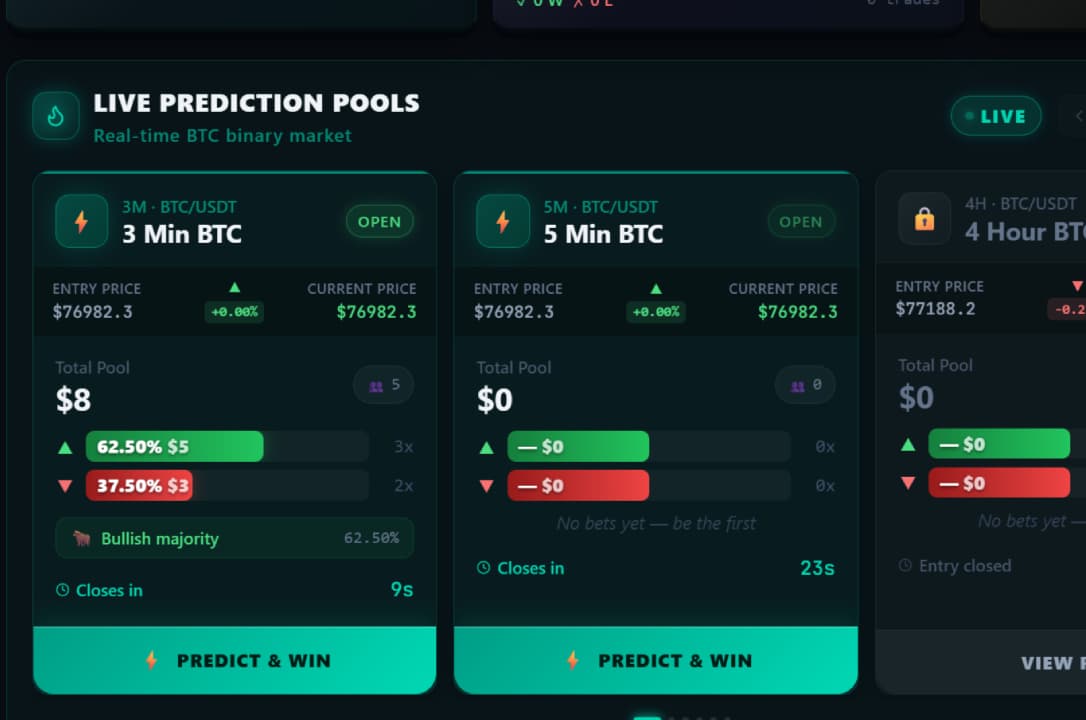
How Much Does Prediction Game Development Cost? Crypto, Sports & Fantasy
Prediction game development cost in 2026 for binary crypto, cricket and football outcome games and fantasy prediction platforms: budgets, drivers, timelines and compliance.

Blockchain Identity Solutions 2026-Secure, Private, User-Owned
Discover how Decentralized Identifiers (DIDs), Self-Sovereign Identity (SSI), and Zero-Knowledge Proofs are transforming identity security, eliminating fraud, and giving users full ownership of their personal data in 2026.